

ACM-W Europe June 2026 Newsletter

In this issue:
- Hidden Structures in Modern Computing: Emmy Noether
- JKU ACM Celebration of Women in Computing
- Welcoming the New ACM-W Student Chapter at the University of Southampton
- Trailblazers in Computing: Marie-Paule Cani
- ACM Scholar Spotlights: Andreea Ardelean
- womENcourage 2026: Nice, France
- ACM-W Koç University Student Chapter Visit to ACM-W UPV and Technovation Girls Comunidad Valenciana
- Cognitive Bias and its impact on women’s advancement in tech #5 : The Moral Credential Effect
Hidden Structures in Modern Computing: Emmy Noether
By Ayesha Afzal
This is the third installment of Research Spotlights in Computing, a technical blog series by ACM-W Europe Team Member Ayesha Afzal that highlights contemporary work across computing research. From this entry onward, the series shifts to case studies of technical innovations led by women role models, beginning with the foundational legacy of Emmy Noether.
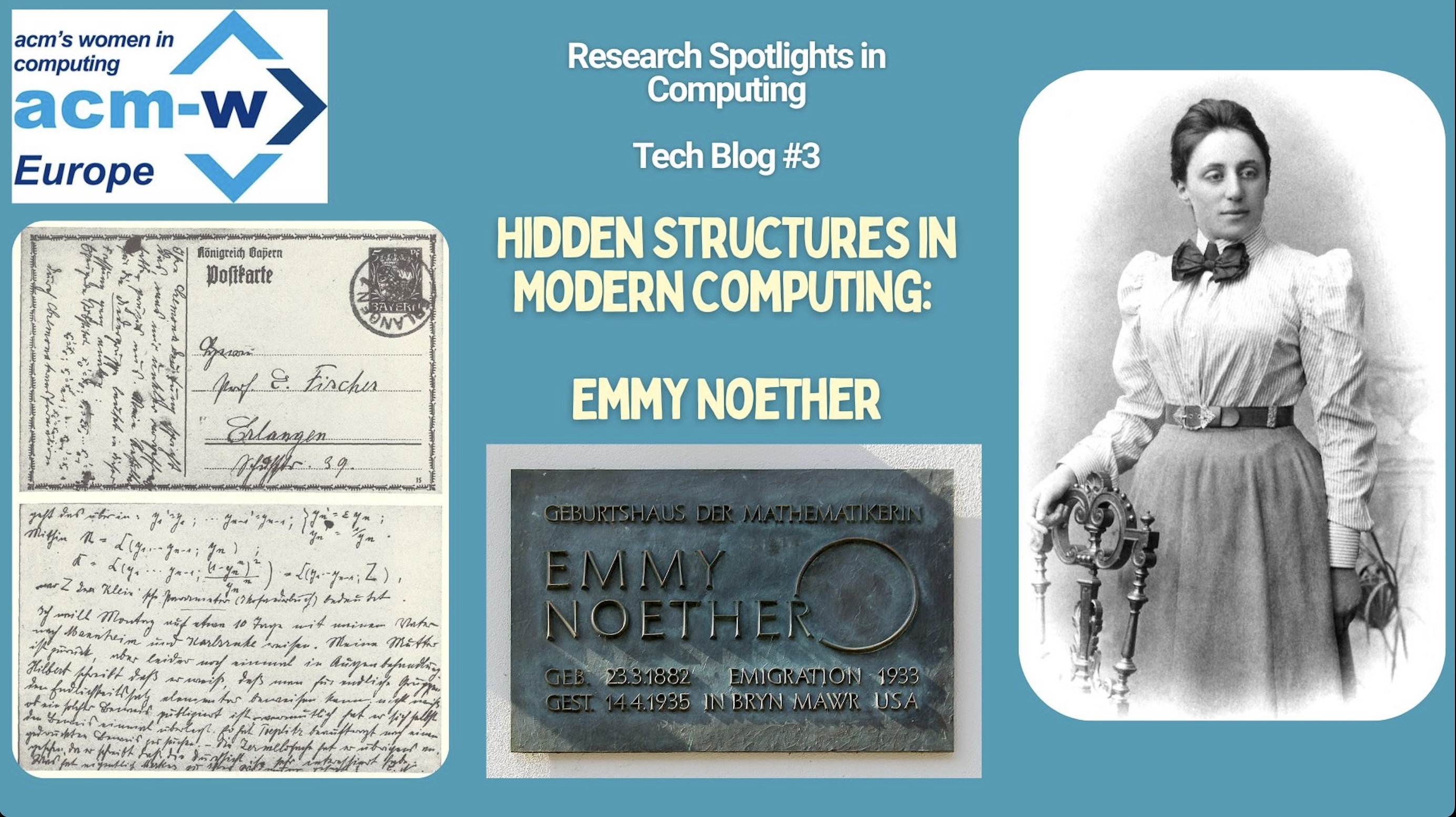
Writing from Erlangen, where Noether was born in 1882 and later studied as one of only two women among 986 students, Ayesha traces her path from an early career in computational invariant theory to her later, more influential focus on structure over calculation. This shift gave rise to her 1918 theorem linking physical symmetries to conservation laws, a result still central to quantum field theory and particle physics today. Her introduction of the Ascending Chain Condition also laid groundwork for modern algebra, with lasting influence on cryptography, coding theory, and formal methods.
The blog draws a personal parallel between Noether’s structural thinking and Ayesha’s own work in high performance computing, where managing complexity also depends on identifying what remains invariant within a system rather than relying on raw measurement alone. The piece closes by reflecting on Noether’s enduring legacy, from the DFG Emmy Noether Programme to supercomputers and institutes bearing her name worldwide.
JKU ACM Celebration of Women in Computing
By Anna Slavi
In early June, Johannes Kepler University in Linz hosted its first ACM Celebration of Women in Computing since the 2016 womENcourage event. The two day gathering, opened by former ACM president Gabriele Kotsis, featured more than 30 student led intervention projects aimed at improving diversity and inclusion in STEM. JKU currently has one of the lowest shares of women in STEM in Austria, with 28% representation at the bachelor level and only 10% at the professorial level.
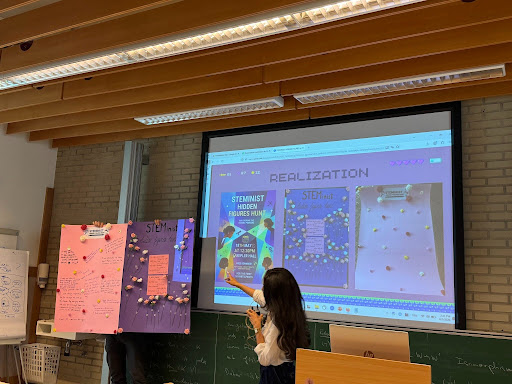
Students presented a wide range of creative approaches including social media campaigns, websites, workshops, and a campus treasure hunt celebrating women role models through posters, poems, and handmade rewards. A recurring theme across the projects was the importance of relatable role models in helping overcome impostor syndrome and supporting the retention of women in computing.
Read more and explore the projects: JKU ACM Celebration of Women in Computing
Watch the recap video: Students Making an Impact in STEM
Related campaigns: Seen in STEM, STEMways Linz, JKU Beyond Stereotypes
Welcoming the New ACM-W Student Chapter at the University of Southampton
By Toshna Rane
ACM-W Europe is delighted to welcome the newly established ACM-W Student Chapter at the University of Southampton. The chapter officially launched in February 2026, but its origins trace back to womENcourage 2025 in Brașov, Romania, where several founding committee members were inspired to bring that same sense of community back home, with support from Dr Adriana Wilde.
To mark the launch, the chapter hosted a panel discussion featuring women from academia and industry sharing their experiences navigating careers in technology. Students asked questions that went well beyond job titles, touching on confidence, belonging, and navigating uncertainty. A key takeaway from the event was that there is no single path into computing, with each panelist arriving at their career through very different experiences and opportunities.
For ACM-W Europe, the Southampton chapter is a strong example of the lasting impact of womENcourage, showing how the conference sparks connections that continue to grow long after the event ends. As preparations begin for womENcourage 2026, the chapter stands as a reminder of why these spaces matter and the ripple effect they can create.
Trailblazers in Computing: Marie-Paule Cani
By Toshna Rane
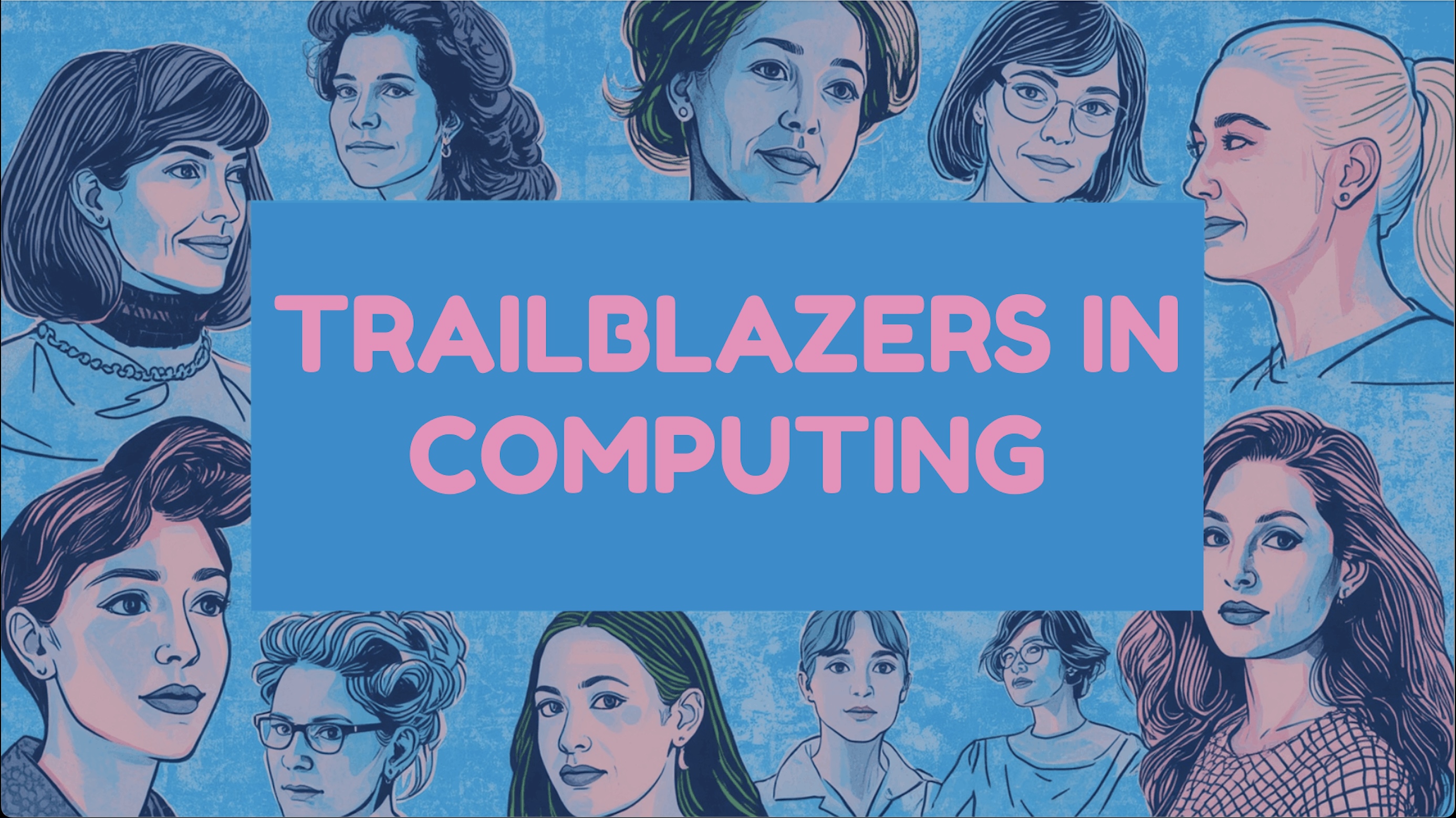
This month’s Trailblazers in Computing spotlight features Marie-Paule Cani, a French computer scientist whose work over more than three decades has shaped the field of computer graphics. A professor at École Polytechnique and a member of the French Academy of Sciences, Cani has focused on making the creation of 3D virtual environments more intuitive, developing methods that let users build sophisticated models through simple interactions like sketching, rather than requiring deep technical expertise.
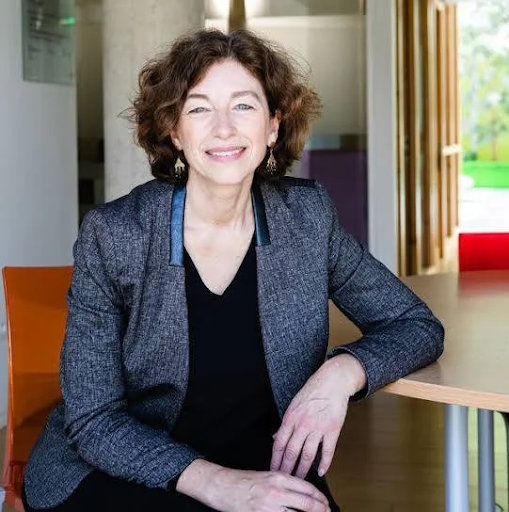
A recurring theme in her research is the representation of nature, from trees and landscapes to water, clouds, and garments, through models that capture the realism and unpredictability of natural phenomena. Beyond her research, Cani has held leadership roles within ACM SIGGRAPH and Eurographics, and her contributions have been recognized with honors including the Eurographics Outstanding Technical Contributions Award, the CNRS Silver Medal, and the Eurographics Distinguished Career Award.
For the ACM-W community, her career is a reminder that there are many paths into shaping the future of computing, whether through research, innovation, mentorship, or leadership.
ACM Scholar Spotlights: Andreea Ardelean
By Toshna Rane
This edition of ACM Scholar Spotlights, a series celebrating women in computing who received the ACM-W Scholarship to attend womENcourage 2025, features Andreea Ardelean, a PhD researcher in Computer Vision and Computer Graphics at Friedrich-Alexander-Universität Erlangen-Nürnberg.
Andreea’s connection to womENcourage began in 2019, when as an undergraduate she attended the Rome edition on a professor’s recommendation, an experience that became her first academic conference and her first contact with a wider community of women in computing. During that same trip, a professor mentioned wanting to one day bring the event to their own university, Transilvania University of Brașov. Six years later, that ambition became reality when Brașov co-organized and hosted womENcourage 2025.
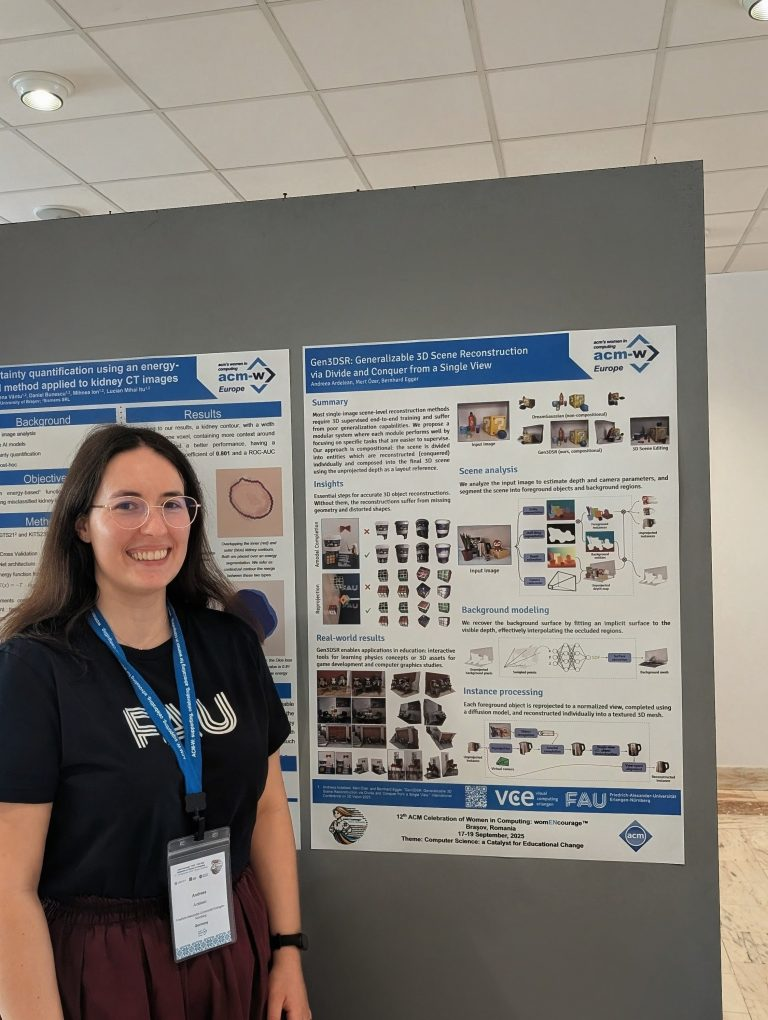
Returning this time as a PhD researcher and scholarship recipient, Andreea found the experience especially meaningful as she reflects on what comes next after her doctorate. She valued reconnecting with the professors who shaped her academic path, hearing perspectives from both industry and academia, presenting her ongoing research, and taking part in technical workshops. She encourages students and early career researchers in particular to consider attending next year’s edition.
womENcourage™ 2026: Nice, France
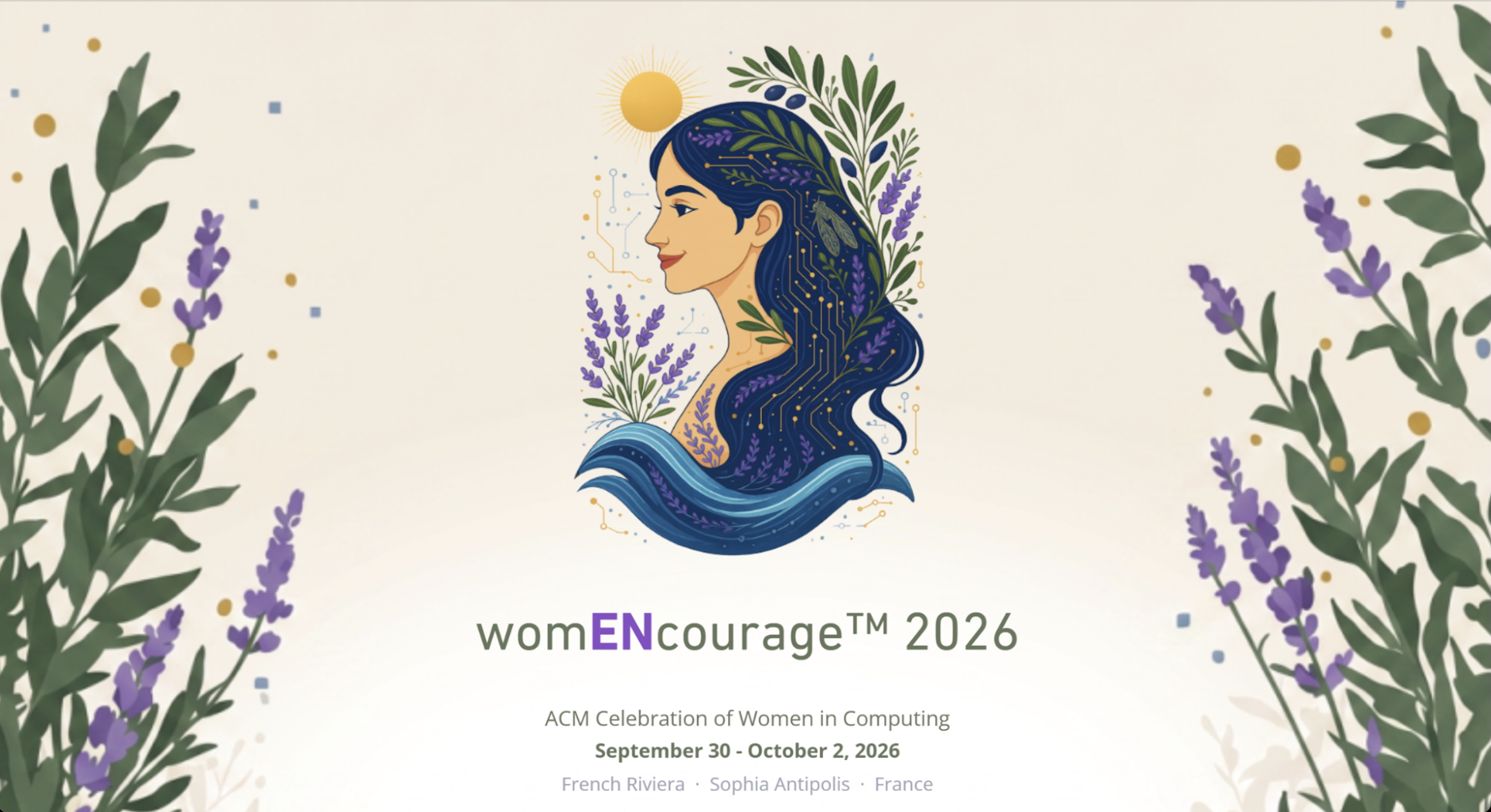
The 13th ACM Celebration of Women in Computing, womENcourage 2026, is heading to the French Riviera in Nice, France from September 30 to October 2. This year’s theme is “Unmute Yourself, Grow Stronger Together”, focusing on well-being and support for women and gender diverse people in computing.
More information : Association for Computing Machinery
ACM-W Koç University Student Chapter Visit to ACM-W UPV and Technovation Girls Comunidad Valenciana
With support from ACM-W Europe, representatives of the ACM-W Koç University Student Chapter visited their buddy chapter, ACM-W UPV at Universitat Politècnica de València, attending an official activity connected to Technovation Girls Comunidad Valenciana. Although the event was held mainly in Spanish, the visiting students were still able to observe how an outreach activity for children and young students was organized, and how a warm and encouraging environment around technology was created.
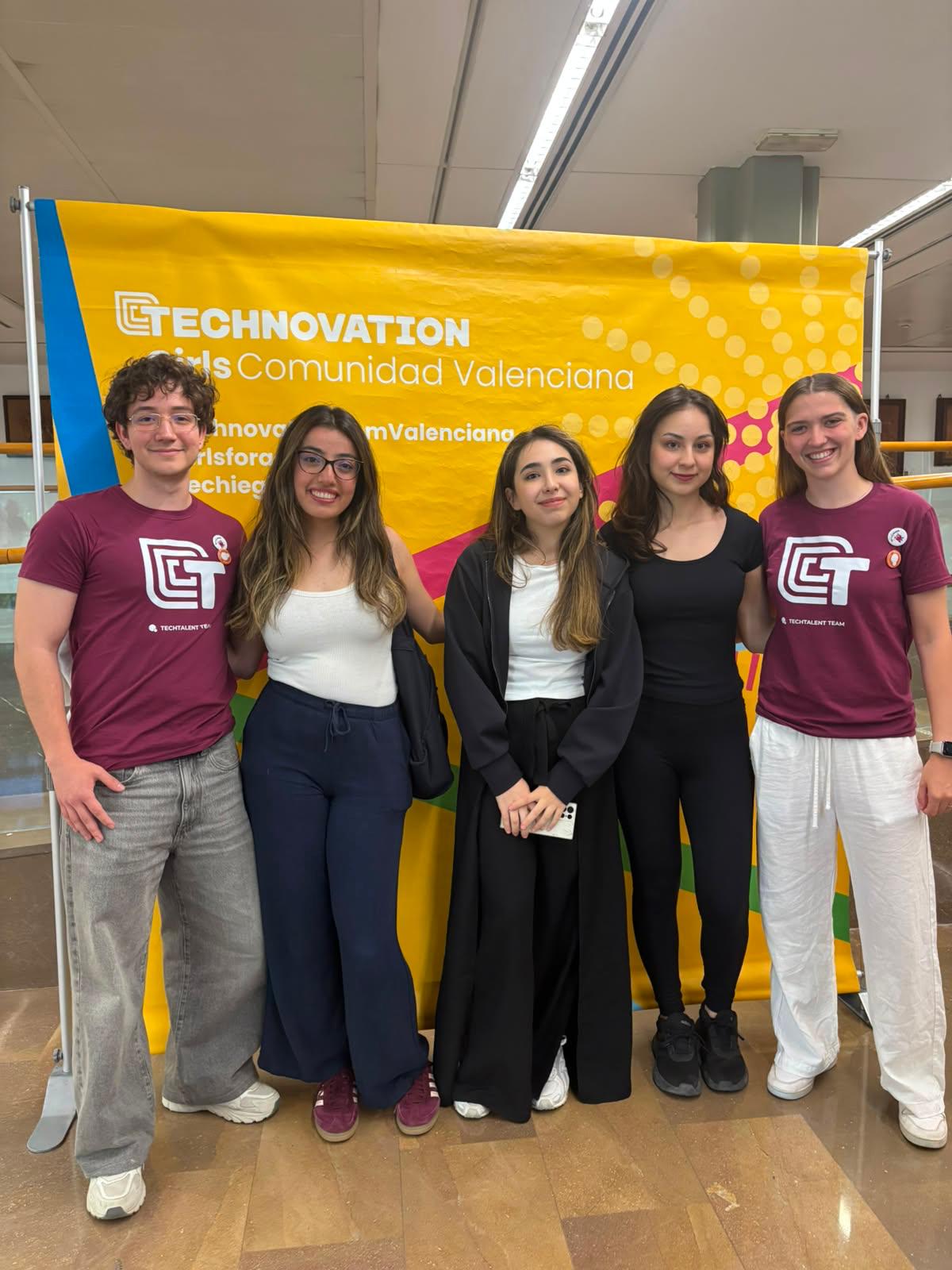
One of the most memorable parts of the visit was the award ceremony, where families filled the room with applause and visible pride as children took the stage to be recognized for their effort, confidence, and creativity. The experience gave the Koç University delegation new ideas about how ACM-W chapters can extend their impact beyond university students.
Inspired by the visit, the chapter now hopes to organize a similar outreach activity at Koç University, introducing children and young students to computing in an engaging and welcoming way. The students extended their thanks to ACM-W Europe for supporting the trip and to ACM-W UPV for hosting them.
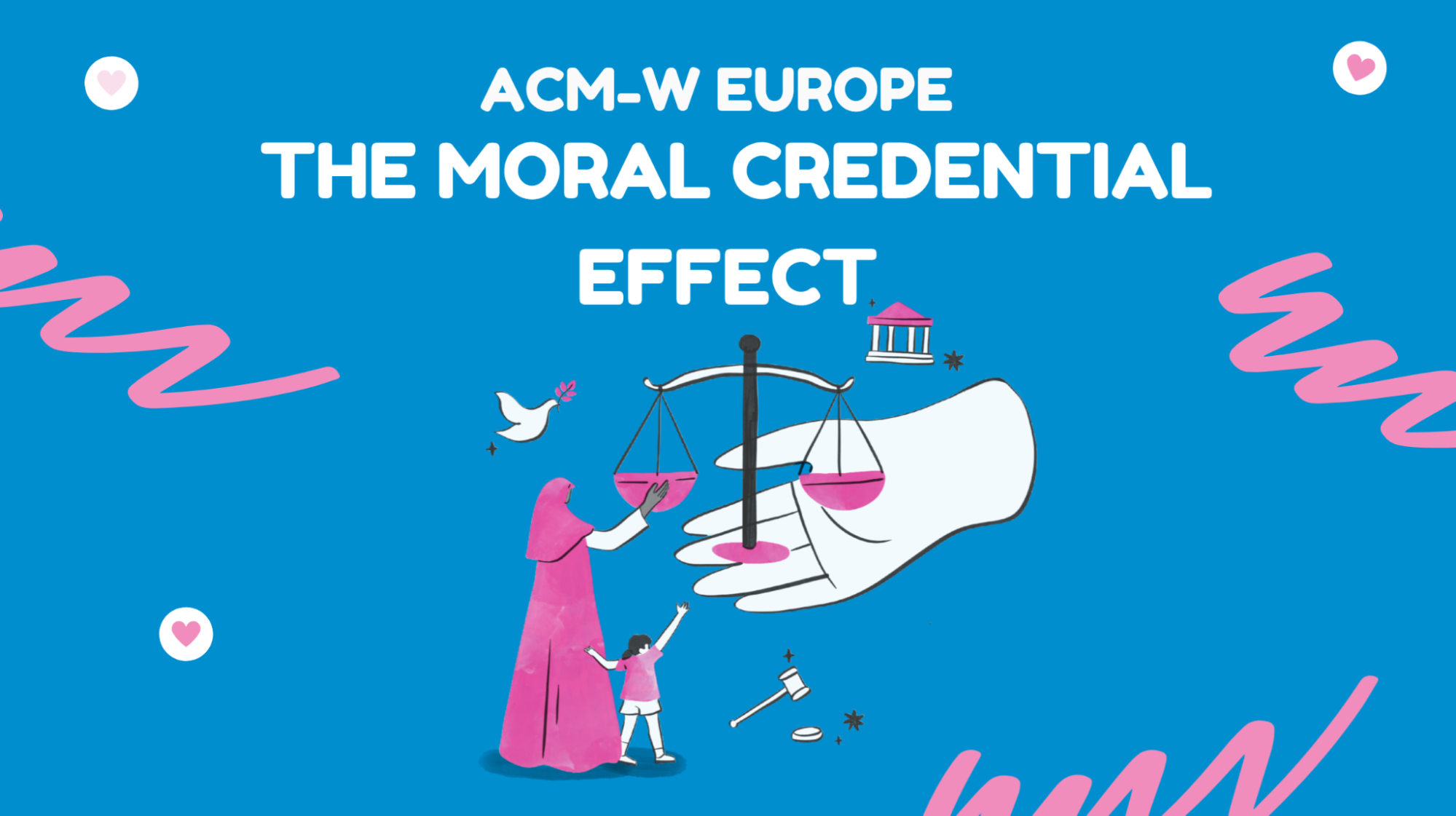
Cognitive Bias and its impact on women’s advancement in tech #5 : The Moral Credential Effect
By Yildiz Culcu
When Good Deeds License Bad Behavior in Organizations
This piece examines the moral credential effect, a well documented bias in which a person’s past good behavior can paradoxically make them more likely to act in a biased or unethical way afterward. The article opens with an illustrative case of a manager who, after leading a successful diversity recruitment initiative, later passes over an equally qualified Black candidate for promotion while dismissing concerns about bias, reasoning that her own track record proves she could not possibly be prejudiced.
Drawing on research first formalized by Monin and Miller in 2001, the piece traces how this effect has been replicated across many contexts, including hiring decisions, charitable giving, and even green consumer behavior, with a 2015 meta analysis of over 7,000 participants confirming the effect’s robustness. The underlying mechanism is described as a kind of moral bank account, where past good deeds function as deposits that people unconsciously draw on to justify later questionable choices, often because established credentials reduce the guilt or discomfort normally associated with biased behavior.
The article also explores how this plays out at the organizational level, noting that the mere presence of diversity programs can create an illusion of fairness that makes both individuals and institutions less likely to notice discrimination when it occurs. It closes with a set of evidence based interventions organizations can use to counter this effect, including continuous bias monitoring, structured decision making before reviewing candidate identities, accountability partners, and framing ethical commitments as ongoing rather than something already accomplished in the past.
Announcements
ACM Awards and Advanced Grades of Membership Deadlines
Each year, ACM recognises its members’ outstanding achievements through awards covering a spectrum of professional and technological areas and different stages of professional development. To learn more about other awards, we recommend ACM President Cherri M. Pancake’s article, dispelling some common myths about ACM Awards and Honors in the Communications of the ACM, August 2019. One of the myths is that the ACM Awards never honour people working outside North America. Prof. Pancake writes that even though nothing would make ACM committees happier than to recognise the achievements of people from around the globe, there are very few nominations. Source: Dispelling Common Myths About ACM Awards and Honors
| Students | HPC Fellowships, Cutler-Bell Prize |
| Early Career | Hopper Award, ACM and SIG Dissertation Awards (recent graduates), SIG “rising star” awards; also Senior Member |
| Mid Career | ACM Prize in Computing; also Distinguished Member |
| Late Career | Turing Award, Distinguished Service Award; also Fellow |
| Area-Specific, typically Mid to Late Career | Thacker Award, Software System Award, Athena Lecturer, Newell Award, Lawler Award, Eckert-Mauchly Award, Kennedy Award, Bell Prize, Karlstrom Award, Kannellakis Award, Policy Award, SIAM/ACM Prize – plus dozens of awards from individual SIGS |
For SIG-specific Awards, please visit https://awards.acm.org/sig-awards.
For ACM Advanced Grades of Membership, please visit https://awards.acm.org/advanced-member-grades.
Thank you for joining us in recognising ACM Women’s accomplishments in Europe and ensuring they are nominated for ACM Awards they deserve.
ACM-W Europe Website https://acmweurope.acm.org
ACM-W Europe Blog https://acmweurope.acm.org/blog
ACM-W Europe Facebook https://www.facebook.com/acmweurope/
ACM-W Europe Website ACM-W Europe Blog Facebook X (@acmweurope) Linkedin