

ACM Scholar Spotlights: Carlota Vazquez Gonzalez
Welcome to ACM Scholar Spotlights, a series where we shine a light on the inspiring paths of women in computing who received the 2024 ACM-W scholarship. Through their own words, we hear how they found their place in tech, what motivates them, and how they’re making an impact. These stories reflect not only technical achievement, but also courage, curiosity, and community.
In this edition, we share the story of Carlota Vazquez Gonzalez, a PhD student in Informatics at King’s College London. From her research on non-verbal communication in videoconferencing to her leadership in founding the Women in Computer Science Society, Carlota is passionate about making technology more empathetic and inclusive. In the following interview, she talks about her journey, challenges, and inspirations, including her experiences at WomENcourage.
Can you tell us a bit about yourself?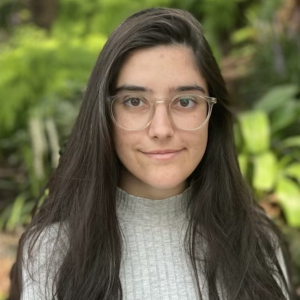
I’m Carlota Vazquez Gonzalez, a second-year PhD student in the Department of Informatics at King’s College London. My research focuses on non-verbal communication in videoconferencing tools, with the goal of improving empathetic understanding between users.
Alongside my PhD, I work as a Graduate Teaching Assistant for several level 6 and 7 modules. I also co-founded the Women in Computer Science Society at King’s, which celebrates gender minorities in computing and challenges bias within the field. Today, I’m still actively involved in both the Women in Computer Science and Women in Science at Informatics Committees.
What got you interested in technology and HCI?
I’ve always been interested in STEM, with computers standing out the most. What fascinated me was the infinite possibilities of combining design with technology.
I chose Human-Computer Interaction (HCI) because I wanted to go beyond the purely technical side and explore the user’s perspective. It’s a field where I can combine empathy, creativity, and computing.
Where do you see your career going?
I’d like to start by working in industry, ideally as part of a research team developing and improving technology. Later on, I hope to return to academia and teach university students about HCI, sharing my passion for the subject.
What helped you get to where you are today?
A combination of things:
-
Good education
-
Support from family and friends
-
My own drive to keep moving forward
The skills I’ve found most valuable are public speaking, project management, and creativity. I also really enjoy designing studies, working with participants, and applying findings to real-world designs.
What challenges do women face in technology right now?
The biggest challenge is the lack of representation and support. Technology remains male-dominated, and in some cases, women face alienation because some men don’t want to work with them. This can lead to imposter syndrome and a lack of confidence.
We need to ensure that women feel they belong in tech, and that their roles are equally if not more valuable than those of men. Importantly, women should feel free to stay in technical roles instead of being pushed toward project management out of self-doubt.
What advice would you give to women starting out?
-
Be passionate about your research topic, passion is the best motivation.
-
Find supervisors you can trust and work well with.
-
Don’t pursue a PhD just for the “Dr” title, do it because you care about your field.
What research are you working on now?
I’m currently running a survey and interviews on privacy in non-verbal communication tools for videoconferencing.
These tools, like the ones in Teams and Zoom, can interpret gestures and facial expressions, but they also record a lot of user data. My research asks:
-
What data should and shouldn’t be recorded?
-
How should this be communicated in a call?
-
Most importantly, who should have access to this information?
How do you deal with imposter syndrome?
Even now, I still feel it. I don’t think imposter syndrome will ever fully disappear, but I remind myself of the evidence of my hard work and achievements.
A major challenge for me was living abroad during my PhD while my family faced health struggles. It caused doubt, unproductivity, and a sense of guilt. What helped was re-evaluating priorities, my family’s time with me is finite, while my degree can wait if needed. I’ve learned that self-care, healthy routines, and time with loved ones are essential to success.
Was WomENcourage your first experience?
My first WomENcourage was in 2023 in Norway, where I taught a workshop outside my university for the first time.
At WomENcourage 2024, I especially enjoyed the poster sessions. Meeting passionate women and hearing their research gave me lasting connections and inspiration.
How does WomENcourage inspire you?
Hearing women talk about their projects with passion makes me think: “They did it and they’re women just like me. I can do it too.” It’s a powerful reminder that gender should never limit ambition.
Who knows maybe one day I’ll host WomENcourage in England!
What advice do you have for future WomENcourage participants?
Sign up for as many workshops and talks as you can. The experience will inspire you, build your network, and make the imposter syndrome monster much smaller.