

The Women’s Marathon: ACM Celebration of Women in Computing at University of Kiel
Ahead of International Women’s Day, the Women’s Marathon at the University of Kiel brought together researchers, students, and community members for a day of exchange and visibility. In this blog, ACM-W Europe volunteer Yildiz reflects on the event and what it reveals about representation and recognition in computing.
What is the Women’s Marathon?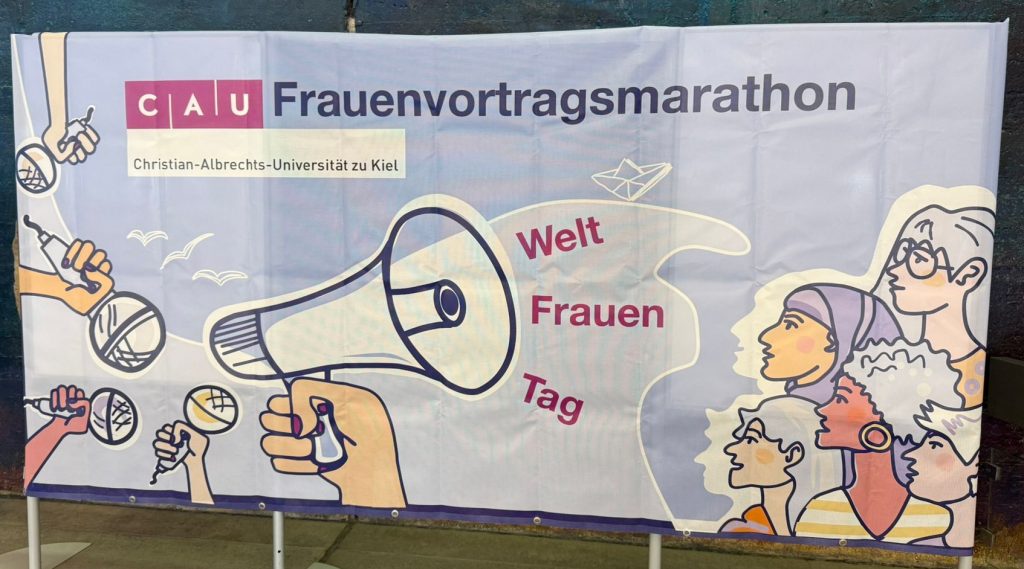
The Women’s Marathon is an ACM Celebration of Women in Computing held at the University of Kiel on March 6th, 2026, ahead of International Women’s Day. The Program Committee—Pamela Fleischmann, Annika Huch, Inna Pfannschmidt, Ines Weber, and Marianne Musinszki—organized a day-long event providing a platform for women researchers to present their work in computing.
The event follows ACM-W’s model of regional celebrations designed to increase visibility of women’s technical contributions and build professional networks. These celebrations address the documented underrepresentation of women in computing and barriers to career advancement.
Notable Presentations
1. The Wikipedia Documentation Gap
ACM-W Europe Wikipedia group volunteer Elif presented research on visibility gaps in computing. Many women in computing meet Wikipedia’s notability criteria but lack encyclopedia entries.
2. Game development for educational purpose
A Master’s student at the University of Kiel presented the findings of her bachelor’s thesis, which is a Game simulating an Escape room and teaching SQL queries via Gamification. A popular trend in Education Sciences. Very interesting and important work.
3. Applied category theory
Mathematics student Lisa Gelfman took attendees of the event on a journey through mathematics’s lesser-known branch, category theory, which focuses on relationships (morphisms) between objects rather than their internal contents. It is a complementary framework to set theory, which is better known to the public. It was interesting to delve into a new world and look at numbers from a completely different perspective. Fascinating work!
4. Global ACM-W Structure and Initiatives
ACM-W Global Chair Rukiye Altin presented ACM-W’s regional structures and projects, showing how local celebrations connect to international efforts. The presentation covered ACM-W’s approach: global coordination provides resources and frameworks, regional chapters adapt to local contexts, and individual celebrations address specific community needs.
Altin outlined ACM-W initiatives, including scholarship programs, mentorship networks for early-career researchers, and Wikipedia edit marathons addressing the documentation gaps identified by the ACM-W Europe team.
Why ACM Supports These Celebrations
The celebrations serve three main purposes:
Knowledge dissemination: Women’s research often gets less visibility than men’s work of equal quality. ACM celebrations provide venues where this research reaches wider audiences.
Network building: Career advancement in computing depends heavily on professional networks. Women typically have less access to the informal networks that lead to opportunities. These celebrations create formal networking spaces.
Retention and recruitment: Seeing successful women in computing encourages others to enter and stay in the field. The celebrations provide role models and reduce the isolation that causes many women to leave computing.
Observed Impact
Attendees at the Kiel event expressed satisfaction with the format. Presenters appreciated having a dedicated space for their research. They noted the contrast with typical computing conferences, where women presenters are few.
The event structure matters. By focusing on research presentations, the celebration positions women as technical experts.