

Trailblazers in Computing: Karen Spärck Jones
This month in our Trailblazers in Computing series, we highlight Karen Spärck Jones, a pioneer in information retrieval whose work laid the foundation for modern search engines. Her research continues to shape how we find and interact with information today.
Introduction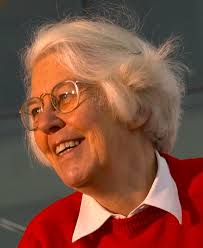
Karen Spärck Jones was a professor of Computers and Information at the University of Cambridge, UK, whose research in automatic language processing and information retrieval has shaped the foundations of modern search engines. Recognised for her pioneering work, she received two major ACM awards, the ACM/AAAI Allen Newell Award and the ACM-W Athena Lecturer Award, as well as the British Computer Society’s Lovelace Medal. Her early doctoral research on synonymy and semantic classification introduced the concept of lexical co-occurrence, laying the groundwork for how computers understand and organise human language, a contribution that continues to influence computing today.
Rethinking How Computers Understand Language
At a time when computing was still largely focused on numbers and formal logic, Karen Spärck Jones was asking a different question: how can computers make sense of human language?
Her work in information retrieval led to the development of a concept known as inverse document frequency, a method that helps determine how important a word is within a document relative to a collection of documents. While it may sound technical, this idea became a core building block for how search engines rank results.
Today, whenever we search for something online and find relevant results within seconds, we are benefiting from principles that trace back to her research.
A Lasting Impact on Modern Computing
What makes Karen Spärck Jones’s work especially remarkable is how foundational it became. She was not building products for immediate use, but developing ideas that would later underpin entire industries.
Her contributions sit at the intersection of linguistics and computer science, showing that computing is not just about machines, but also about understanding people and the way we communicate. This perspective continues to influence fields like natural language processing and artificial intelligence today.
A Voice for Inclusion in Computing
Beyond her research, Karen Spärck Jones was also known for speaking openly about representation in the field. She once remarked, “Computing is too important to be left to men,” a statement that continues to resonate across generations.
Her words reflect an understanding that progress in computing depends not only on technical innovation, but also on who gets to participate and contribute.
Why Her Story Still Matters
Stories like Karen Spärck Jones’s remind us that some of the most influential contributions in computing are not always the most visible. Her work continues to shape how we access information, learn, and connect with the world.
For the ACM-W community, highlighting these stories is part of recognising the depth and diversity of contributions that have built the field. It also reinforces the idea that computing thrives when different perspectives are included and valued.